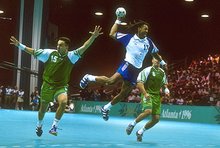
One of the most common misconceptions among athletes is that they can get in shape and continue to improve physically simply by participating in their sport. Many athletes are convinced that they are either too old, too young, or not elite enough to benefit from a coach or a sports conditioning program. This is nothing but a myth! The truth is that anyone, at any level, can benefit from such a program.
The higher level of performance desired, the more efficiently and consistently one wishes to perform, (competitively or not) and the more potential that exists for injury (due to either training volume or the inherent danger of the sport itself) the more important it becomes to design a specific sports conditioning program tailored to the athlete and his or her specific sport or event.
Based on the messages we get from popular media regarding fitness, which usually only addresses the 3 basic components of sports conditioning- (endurance, strength, and flexibility) it is easy to assume that if an athlete is reasonably "fit" they don't need a special sports conditioning program. A 30 minute jog, a few bench presses and leg presses, and you are ready to go, right? Wrong.
Many strength training programs given to athletes are based on a cookie-cutter bodybuilding routines which are not the most effective way to prepare athletes for complex and/or repetitive movements. They can actually be counterproductive.
Athletes need to train functionally, which means using not just the "prime mover" muscles in isolation, (leg extensions, for example) but training muscles that stabilize you (hold you up and keep you balanced)
Athletes should train all the muscles involved in complex movement, in multiple planes, using multiple joints in concert with each other. A complex movement is like a symphony. Can you imagine a well- rehearsed string section that never rehearsed with the brass section? What if the percussion section came in at the wrong time? The muscles in your body and your entire nervous system must learn to work in concert with each other, in perfect harmony, with perfect timing. This is how our body moves in real life and in sport.
Cardiovascular Endurance - The heart's ability to deliver blood to working muscles; the ability of the muscles to use the blood delivered by the heart.
Strength - The extent to which muscles exert force by contracting against resistance.
Flexibility - The ability to achieve an extended range of motion without being impeded by excess tissue, i.e. fat or muscle.
Speed - The ability to move efficiently and quickly without wasted movement or effort.
Power - The combination of speed and strength; the ability to exert maximum muscular contraction instantly in an explosive burst of movement (plyometics).
Agility - The ability to perform a series of explosive power movements in rapid succession in opposing directions.
Balance - The ability to control the body's position, either stationary (e.g. a trackstand) or while moving (skiing, snowboarding, cornering on a bicycle at speed).
Strength Endurance - A muscle's ability to perform a maximum contracture time after time (relentless hill climbs).
Coordination - The ability to integrate the above listed components so that effective movements are achieved using the correct combinations of muscles in the correct order.
An comprehensive sports conditioning program may or may not be focused primarily on resistance training in the "weight room". The combination of exercises that can be performed is almost limitless.
In addition to weight machines, free weights, and cable machines, stairs, bleachers, stability balls, balance tools, and other resistance tools can be used to create a routine for a specific sport or training cycle, keeping the body challenged and preventing boredom.
Agility and plyometric training are often performed in a gym environment as the surface the exercises are performed on is crucial. Suspended wood floors work best. The worst surface to perform plyometric or agility drills on is concrete.
All athletes can benefit from resistance training in the gym. Some athletes can get away with decreasing time spent in the gym during the off-season (young, male cyclists for example, may be able to hold onto strength gained from winter sessions pumping iron) but many female and master athletes will lose much of their hard-earned muscle mass during the competitive season. In the gym, with the guidance of a personal trainer or coach, muscle imbalances can also be addressed. It is not at all uncommon for even the fittest athletes to develop muscle imbalances. For example, cyclists may have weak hip abductors, (outside of hips) which can affect hill climbing power. Common muscle imbalances in athletes include: quad/hamstring strength ratio, uneven strength in muscles surrounding the knee, which can pull the patella out of alignment, and one side of the body being stronger than the other. Can you imagine how all this would affect your overall performance?
Runners and endurance athletes can benefit from spending some time in the gym. One major advantage to weight training is the reduction in injuries. By strengthening the legs, and doing so without pounding the pavement, you are giving your legs a break. Training the upper body in the weight room can help prevent fatigue in long races by helping you maintain good posture and economy of movement. Yes, that's right. Weight training will not slow you down or bulk you up, but actually IMPROVE economy, making you faster!
It may seem obvious that power and speed athletes, such as hockey players, soccer players, skiers, gymnasts, and motocross racers benefit from time spent in the gym. Power athletes need a very strong base of strength in order to achieve maximum power. Muscles must also be adequately prepared for the level of stress that they will undergo when training for explosive power. When strength is developed, these athletes can concentrate on improving their explosive power through plyometric training.
Power and speed athletes are more likely to sustain acute injuries than endurance athletes. Time spent in the gym can insure that the structural integrity of the muscles, ligaments, and tendons is strong so that impacts resulting from playing contact sports or crashes sustained from participation in gravity sports such as skiing are not as devastating, Injury prevention alone is a very compelling reason for these athletes to spend time on resistance training as well as balance and agility training.
Balance and coordination are considered functional and a crucial component of training for everyone, not just athletes. Balance and coordination training is just as important for seniors as for an elite snowboarder. Again, a well-rounded conditioning program will include balance and agility drills appropriate for your sport.
Dancers and martial artists have known for years that power originates in the "core" which includes the stabilizing muscles in the abdominal, lower and upper back, and pelvic regions. A well-rounded program for conditioning the core would include classic "prime mover" exercises like crunches, and stabilizing exercises that challenge core stability.
Core training is important for endurance athletes in order to prevent fatigue on long training rides, runs or swims. It is much easier to maintain good form when the core is strong.
Core training is essential for power athletes - when kicking a soccer ball, for example, your power is generated from your center. Mountain biking provides another excellent example of the benefits of having a strong core, or center. The ability to control the bike comes from having a strong upper body. Power is transferred through center of the body into the lower body, allowing for maximum transfer of force to the pedals when practicing skills such as cornering and jumping and even climbing.
Getting the most out of your sport requires an intelligent, methodical approach to training. We would love to design the perfect plan for you, no matter what your sport or your level of play.
Julie Odler, Associate Coach
JDS Sportcoaching, LLC
Article taken from http://www.jdssportcoaching.com